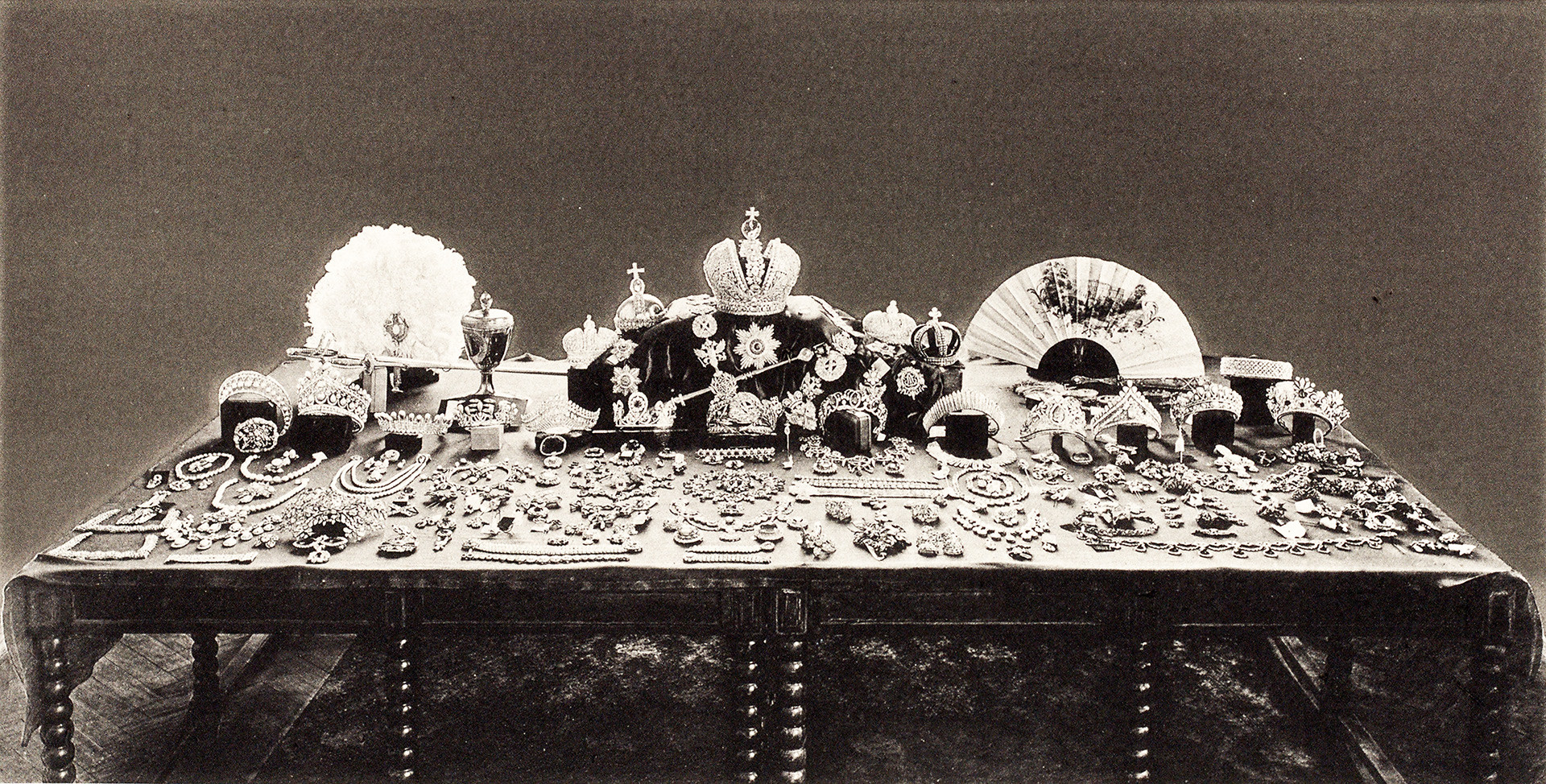
Until the Revolution of 1917, the Romanov line ruled Russia for over 300 years, during which it accumulated a vast collection of jewels created by the most talented artisans. This includes numerous masterpieces of jewelry, from bracelets and brooches to the famous Fabergé eggs. These creations so impressed European ambassadors and leaders that they repeatedly mentioned these objects in their memoirs after visiting the Russian imperial court.
Read also: Fabergé… and the Others: The Jewelers Who Supplied the Tsars
After the fall of the Crown and the devastating civil war, the young socialist state nevertheless did not take long to sell these jewels to raise funds to build a new society. These priceless treasures amassed by the former regime were then put up for auction or sold directly to American and European millionaires.
Some artefacts, mainly women’s jewellery, were broken up into fragments and discreetly sold. Others found buyers abroad or disappeared without a trace. Nevertheless, a number of important pieces remained in the country and are now kept under lock and key within the Kremlin itself.
The Imperial Crown of Russia
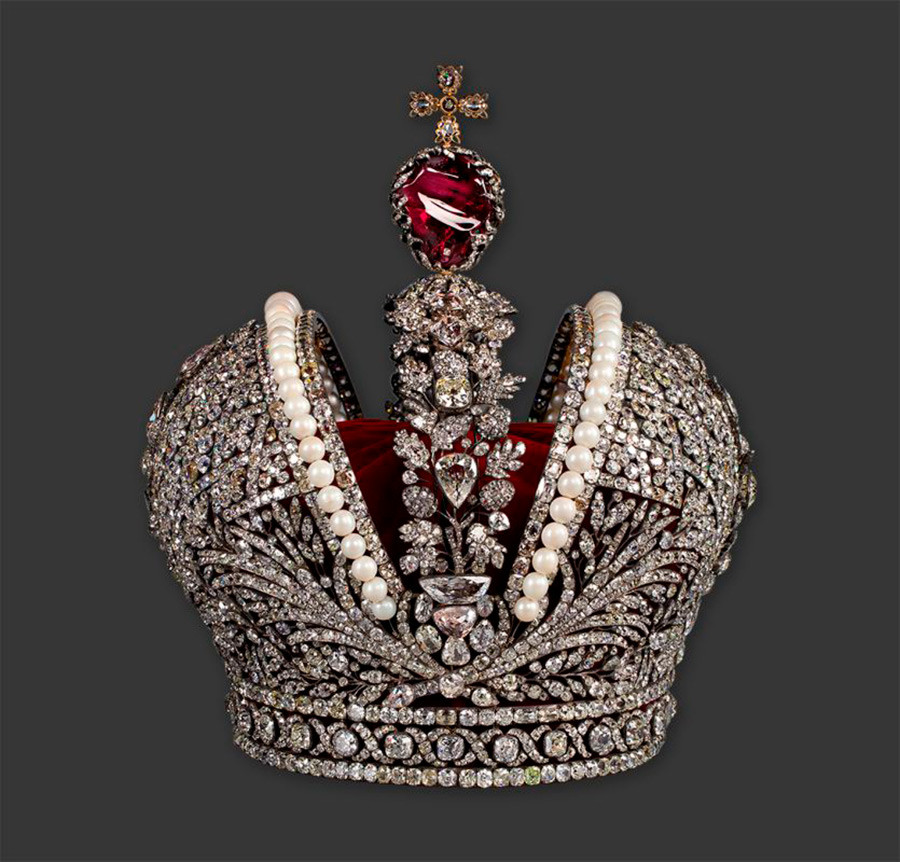
The Russian Imperial Crown, also known as the Great Imperial Crown, was the foremost symbol of the power of the Russian monarchs and the principal imperial regalia between 1762 and 1917. It was worn by every ruler of the country, beginning with Catherine II and up to Nicholas II. Created by court jeweller George Friedrich Eckart and master diamond cutter Jeremiah Posier, it is set with no fewer than 4,936 diamonds (a total of 2,858 carats), 75 large matte Indian pearls, and a 398.72-carat spinel.
Following the Revolution, this extraordinary object fortunately remained in the country and survived the turbulent events. Today, however, it is kept under lock and key in the Diamond Fund collection at the Moscow Kremlin and is not accessible to the public, as its value is simply too great to take any risk. To showcase the splendour of this crown, a replica was nevertheless produced in 2012 for around one billion roubles (€13.22 million) and was exhibited throughout Russia and even beyond its borders.
Maria Feodorovna’s Diadem
Another treasure preserved in the Diamond Fund is the diadem (kokoshnik) that belonged to Paul I’s wife, Empress Maria Feodorovna. Probably the only original Russian diadem, it survived the Revolution and today constitutes an important piece in the Fund’s collection.
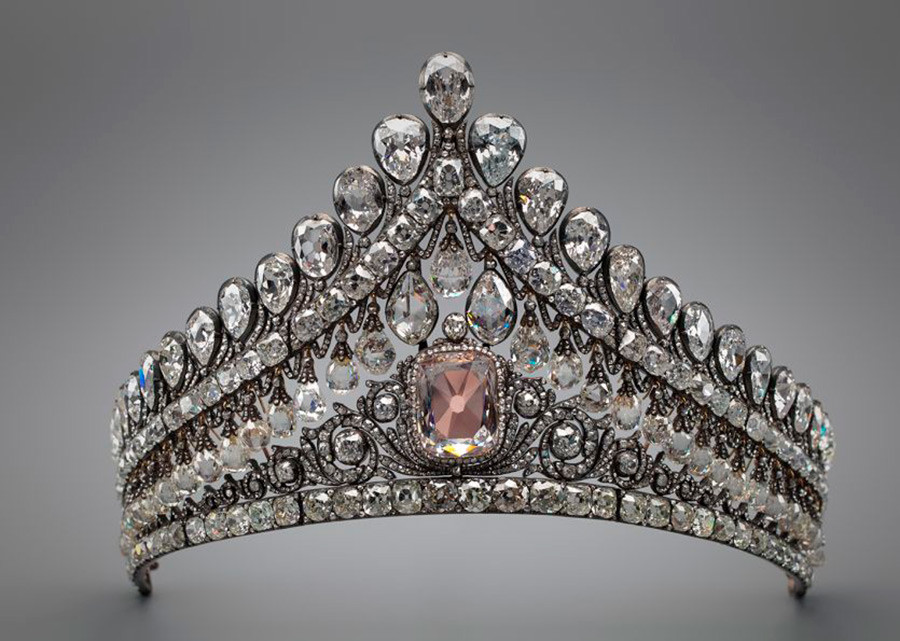
A regular element of the imperial wedding attire, this triangular Empire-style diadem is set with diamonds of various shapes and sizes. The briolettes (central teardrop-shaped gems) are movable and chime with the slightest movement of the head. The central stone of the diadem is moreover a rare 13.35-carat pale pink diamond.
The “Russian Beauty” Diadem
This breathtaking tiara decorated with pearls and diamonds is nicknamed “Russian Beauty” and has experienced a less fortunate fate than the two previous jewels. Designed in 1842 by court jeweler Carl Bolin for Alexandra Feodorovna, wife of Nicholas I, it was the favorite piece of Empress Maria Feodorovna, Danish Princess Dagmar married to Tsar Alexander III. The diadem is so splendid that she kept it on her head even in her private apartments. In 1919, however, after the assassination of her son Nicholas II and his family, she fled the country and the tiara along with other precious imperial objects ended up in the hands of the Bolsheviks.

“Russian Beauty” was subsequently sold at auction by the London house Christie’s in 1927 to Holmes & Co., which itself sold it to the 9th Duke of Marlborough, who acquired it for his second wife, Gladys. Upon her death in 1977, the tiara once again changed hands and ended up in the collection of the First Lady of the Philippines, Imelda Marcos. However, after she and her husband fled to Hawaii in 1986, the tiara along with Marcos’s entire collection was confiscated by the authorities. It is said that it could resurface if the Philippine government decided to auction it or put it on display.
Read also: The Fabergé Epic from Splendor to the Fall of Imperial Russia
The Pearl and Sapphire Necklace
This other jewel of Maria Feodorovna also passed through the hands of the British royal family. This necklace of pearls and precious stones was indeed offered at auction after Maria’s death, along with other personal effects, and was reportedly purchased by Queen Mary.
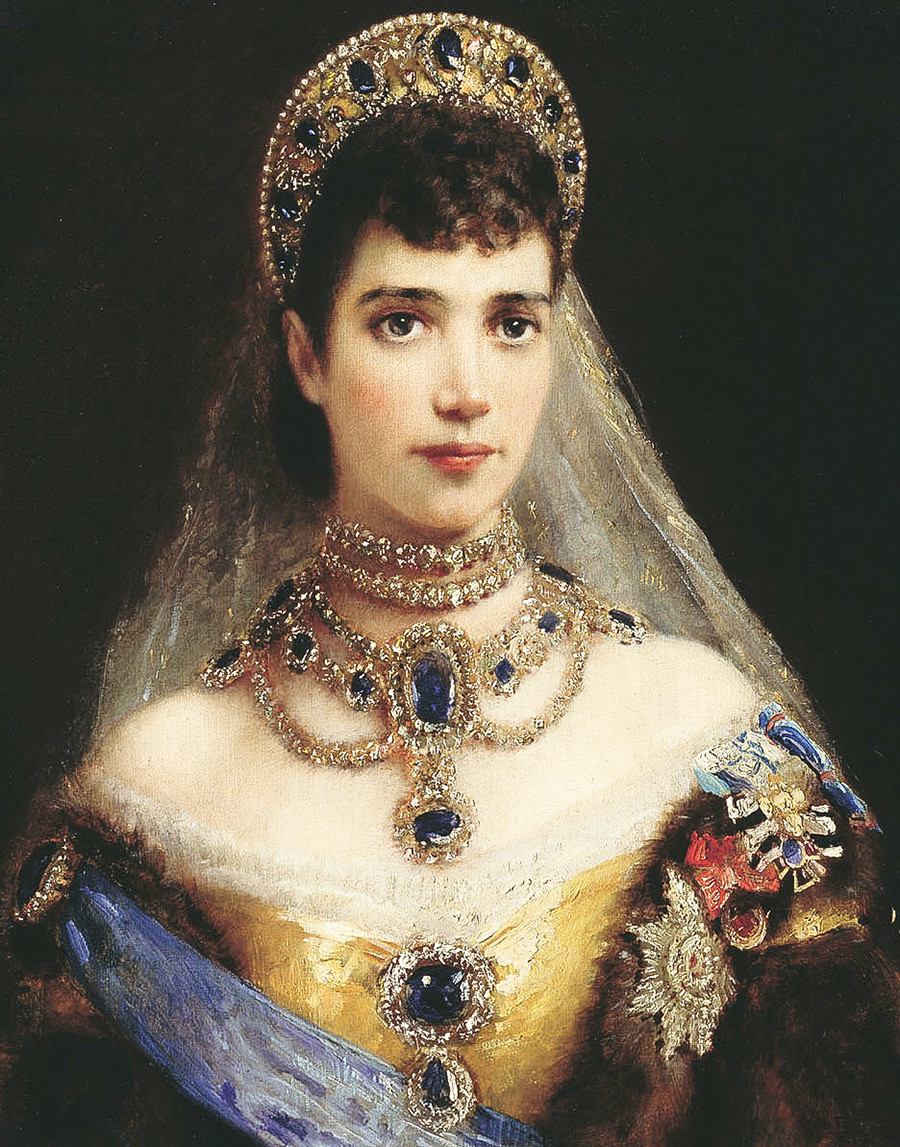
Portrait of Maria Feodorovna
Irkutsk Museum of Fine Arts
Following her death in 1953, Elizabeth II consequently inherited it. The necklace has moreover been frequently worn by Her Majesty’s daughter, Anne, for special occasions, such as the gala held in 2011 during the night preceding Prince William’s wedding.
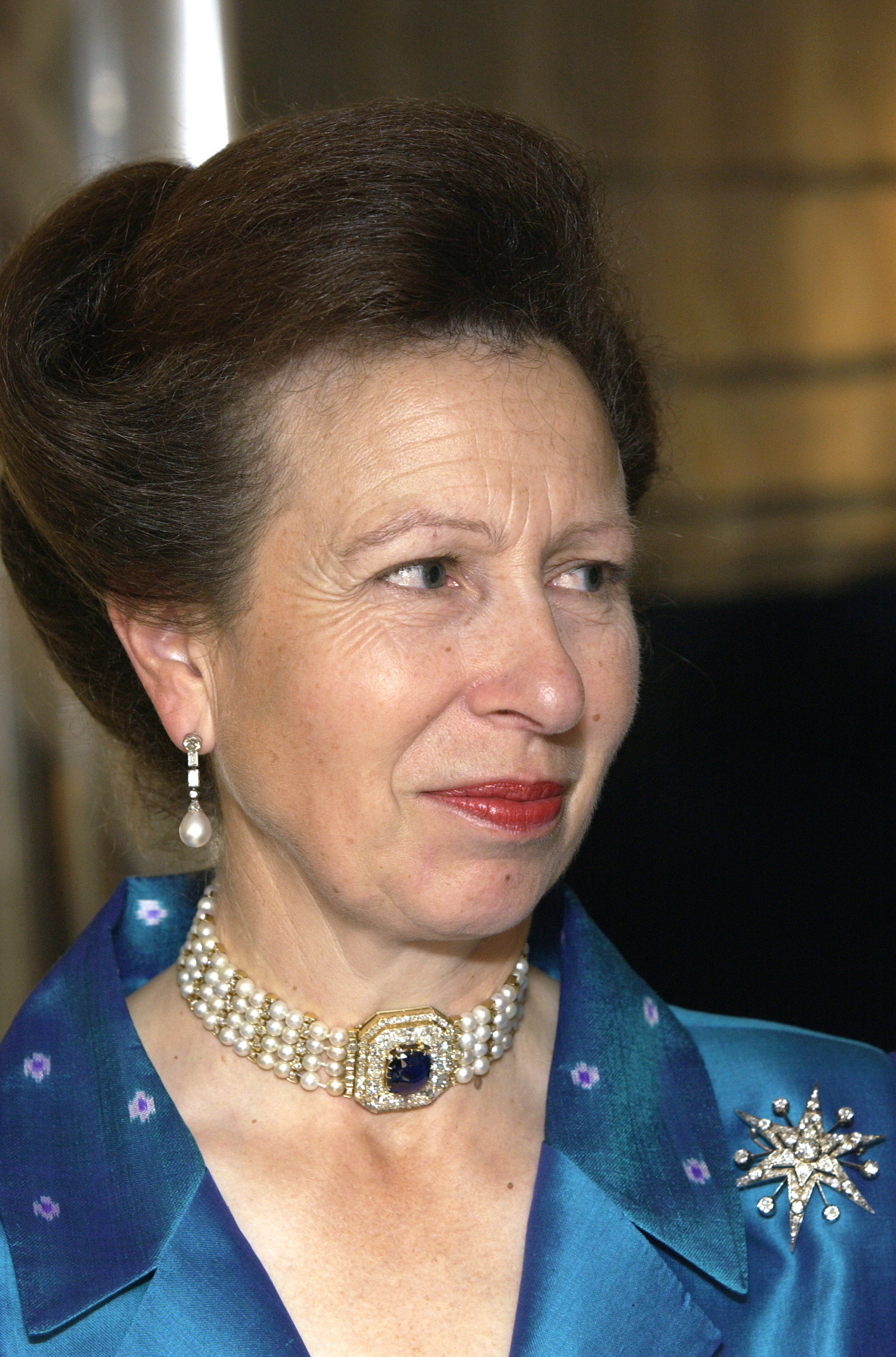
Anne of the United Kingdom
Getty Images
The Sapphire and Diamond Bow Brooch
This sublime brooch adorned with a sapphire is one of four previously unknown Romanov jewels discovered a few years ago at the Library of the United States Geological Survey.
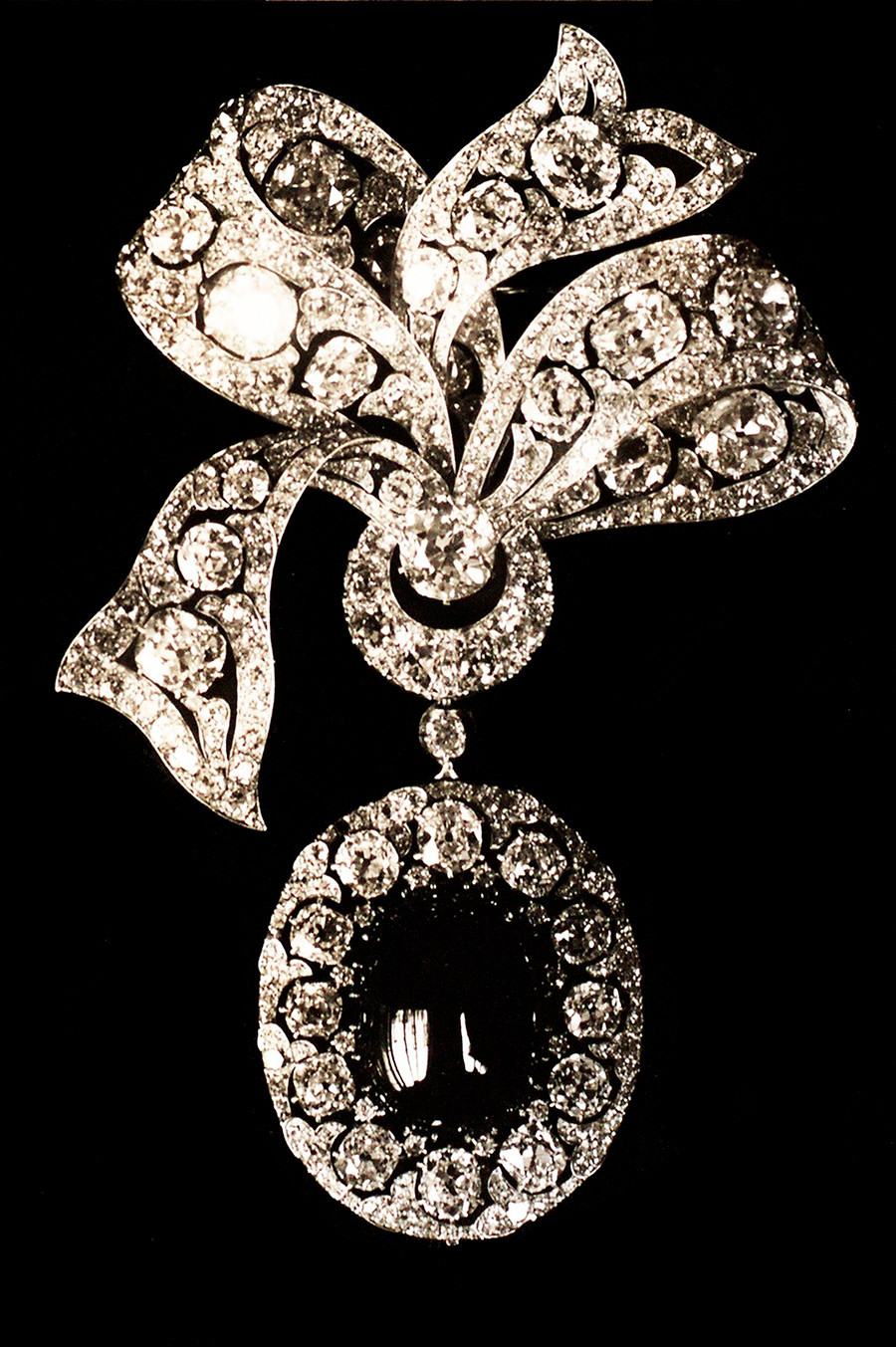
In fact, only a photograph of this jewel was found, along with images of three other forgotten pieces: a tiara set with sapphires and diamonds, a sapphire bracelet, and an emerald necklace. These photographs do appear in the 1922 album of the Russian Diamond Fund, kept in the institution’s room reserved for rare books, but they do not feature in the official documentation of the Russian Crown Jewels published in 1925. American researchers later managed to determine that the brooch was sold in London in 1927. What happened to it thereafter, and what became of the other three precious accessories, remains a mystery to this day.
Source: rbth.com